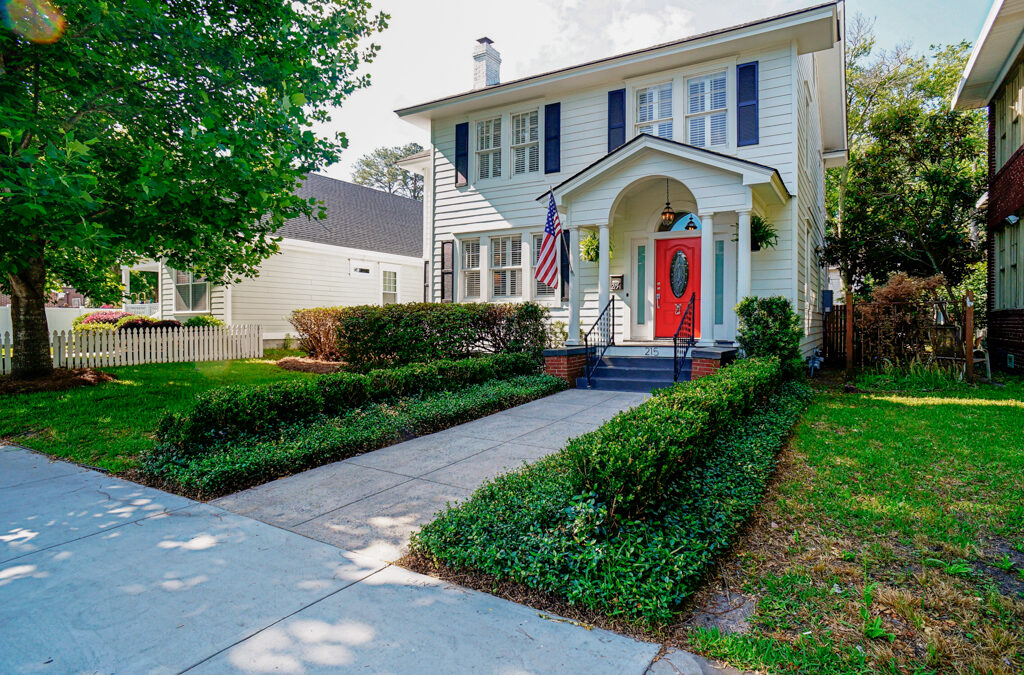
Summary of Jason Cerbone's Appellate Brief against Queensborough Bank
Background
Jason Cerbone and Queensborough Bank had a 2017 loan agreement secured by his Savannah home. After a November 2020 default/acceleration letter, the parties negotiated toward a forbearance agreement even as the Bank advertised a January 5, 2021 non-judicial foreclosure. The Bank emailed a forbearance offer (requiring roughly $32,868.50 to bring the loan current) not to Cerbone but to a purported agent, Ryan Murphy. But, Cerbone didn't receive it until December 31, 2020 — five days before the sale. Cerbone had $35,000 on hand and tried to tender payment, but the Bank proceeded with the foreclosure anyway, selling the home for $332,415 — $85,629 under fair market value. Litigation followed; co-defendants Lanier Management, (“Lanier”) and BLR Savannah, LLC represented by Jason Pedigo (the purchaser) won summary judgment in 2021, leaving only the Bank as defendant. After a long delay, the trial court granted the Bank summary judgment on June 8, 2026, finding no enforceable forbearance agreement and a proper foreclosure sale.
The House on 48th Street
It was my home. It sat at 215 East 48th Street in Savannah. I was born in this city and I bought the house in January 2017. Queensborough Bank, or Queensborough National Bank and Trust Company held the loan. The house secured it.
In November 2020 the bank sent a letter. It said I was in default. It said the loan was accelerated. The letter came on November 14. I read it and I understood what it meant.
We talked after that. I believed we were working it out. Then on December 10 the bank began to advertise the sale. It ran in the county legal organ. The sale was set for January 5, 2021.
The talks went on while the notice ran. That is the part that matters. On December 31, 2020 in the afternoon I received a phone call from Ryan. He said he was emailing me over an offer of Forbearance, and that all I had to do was sign it. The bank put an offer in writing. It was a forbearance agreement. Pay $29,797.93 and $3,070.57 in late fees, and the bank would stop the sale and bring the loan back. It came to $32,868.50.
The bank did not send it to me. It sent it to a man named Ryan Murphy. Murphy had asked me if he could talk to the bank about the loan. Talk. Not sign. Not bind me. Queensborough Bank’s vice president, Mike English said Murphy could discuss payment terms. That was a I got the offer on December 31. It was New Year's Eve. The sale was five days away.
I wrote the bank that same night. I told them there was $35,000 in a lawyer's trust account, sent by my father. I told them the money was waiting. I told them I wanted to pay what I owed. I asked them to call me. I gave them my number. Nobody called.
On the day of the sale a lawyer named Josh Walker texted the bank's lawyer. I did not know Walker. I had never hired him. He asked if the bank would take less. The bank's lawyer answered that they could obviously bring it current per the amount provided.
Obviously.
At 2:35 that afternoon the bank sold the house. It went for $332,415. That was $85,629 under what it was worth.
Two days later a man left a note at my door. It said BLR Savannah, LLC ( aka: Lanier Management, (“Lanier”) and BLR Savannah, LLC) had bought my home at auction.
I filed suit on January 20, 2021. I claimed breach of contract and wrongful foreclosure. In September 2021 the court let the buyer and its management company out of the case. The bank stayed in. Then the case sat. Years went by. In March 2022 they served the writ of possession and I lost the house.
On June 8, 2026, the trial court granted the bank summary judgment. It found there was no forbearance agreement. It found the sale was proper.
I have appealed. The case is in the Georgia Court of Appeals, No. A27A0001. I am my own lawyer in it.
Here is what I argue.
- Waiver by conduct: A bank that keeps negotiating can waive its right to demand strict compliance. The Georgia Supreme Court said so in Atlanta Dwellings v. Wright. When the conduct of the parties raises that question, a jury decides it. The bank negotiated up to the hour of the sale. That is a question for a jury.
- Murphy's authority:Murphy had no power to bind me. A man cannot make himself an agent by his own words. The Court of Appeals said that in Coleman v. United Health Services. Whether the bank was reasonable to send the offer to Murphy and not to me is a question of fact.
- Walker's authority:Walker was never my agent at all.
- Attorney disqualification: Queensborough's lawyers were witnesses. They were in the texts and the calls. Under Georgia Rule of Professional Conduct 3.7, a lawyer who is a necessary witness should not be the advocate at trial. I moved to disqualify them in May 2025. The court did not rule on it before it granted summary judgment. The Bank's attorneys (Colby Longley and Robert L. McCorkle, III) should have been disqualified under Georgia Rule of Professional Conduct 3.7(a) because they were percipient fact witnesses to the negotiations (Longley allegedly admitted in a May 27, 2026 hearing that counsel would withdraw if the case survived summary judgment).
- Untimely modification of prior judgment: The court could not change a final judgment after its term ended. The 2021 order was final. An order entered without authority is void.
I am asking the Court of Appeals to reverse.
That is the story. I had the money. I asked them to call. The house is gone. Now the court will decide.